
Why We Built ReleaseBytes: Keeping Up with Cloud and AI Platform Releases Became Impossible
Engineering teams now depend on dozens of cloud, AI and developer platforms. We built ReleaseBytes to make staying up to date simple again.
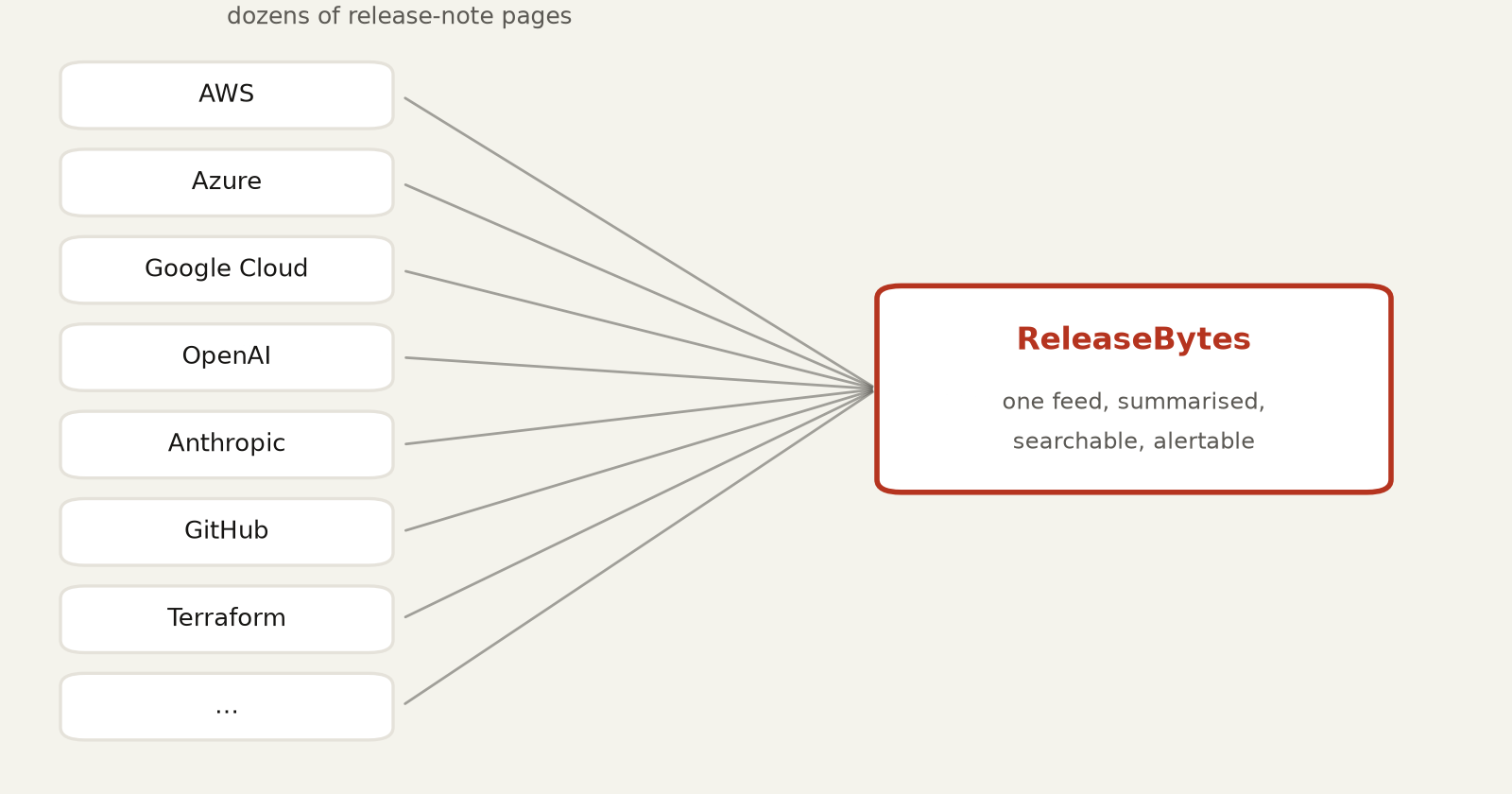
Every week, AWS, Azure, Google Cloud, OpenAI, Anthropic and dozens of other platforms publish hundreds of release notes.
Most engineers don't work with a single platform anymore. A modern stack might include cloud infrastructure, AI models, developer tools, databases and CI/CD systems - all evolving independently.
The problem isn't that release notes don't exist.
The problem is that they're scattered across dozens of websites, blogs, RSS feeds and documentation portals.
Keeping up has quietly become a job in itself.
The problem
Imagine you're responsible for a platform that uses AWS, Terraform, GitHub, OpenAI and Anthropic.
Each vendor publishes updates differently.
Some announce entirely new capabilities.
Some introduce breaking changes.
Others quietly deprecate features that your team relies on.
Individually, each release note is manageable.
Collectively, they become information overload.
Most engineering teams don't have time to check ten different release note pages every morning, so important updates are often discovered weeks later - or not at all.
Building one place for platform updates
We built ReleaseBytes to solve a simple problem:
What if every important platform update lived in one place?
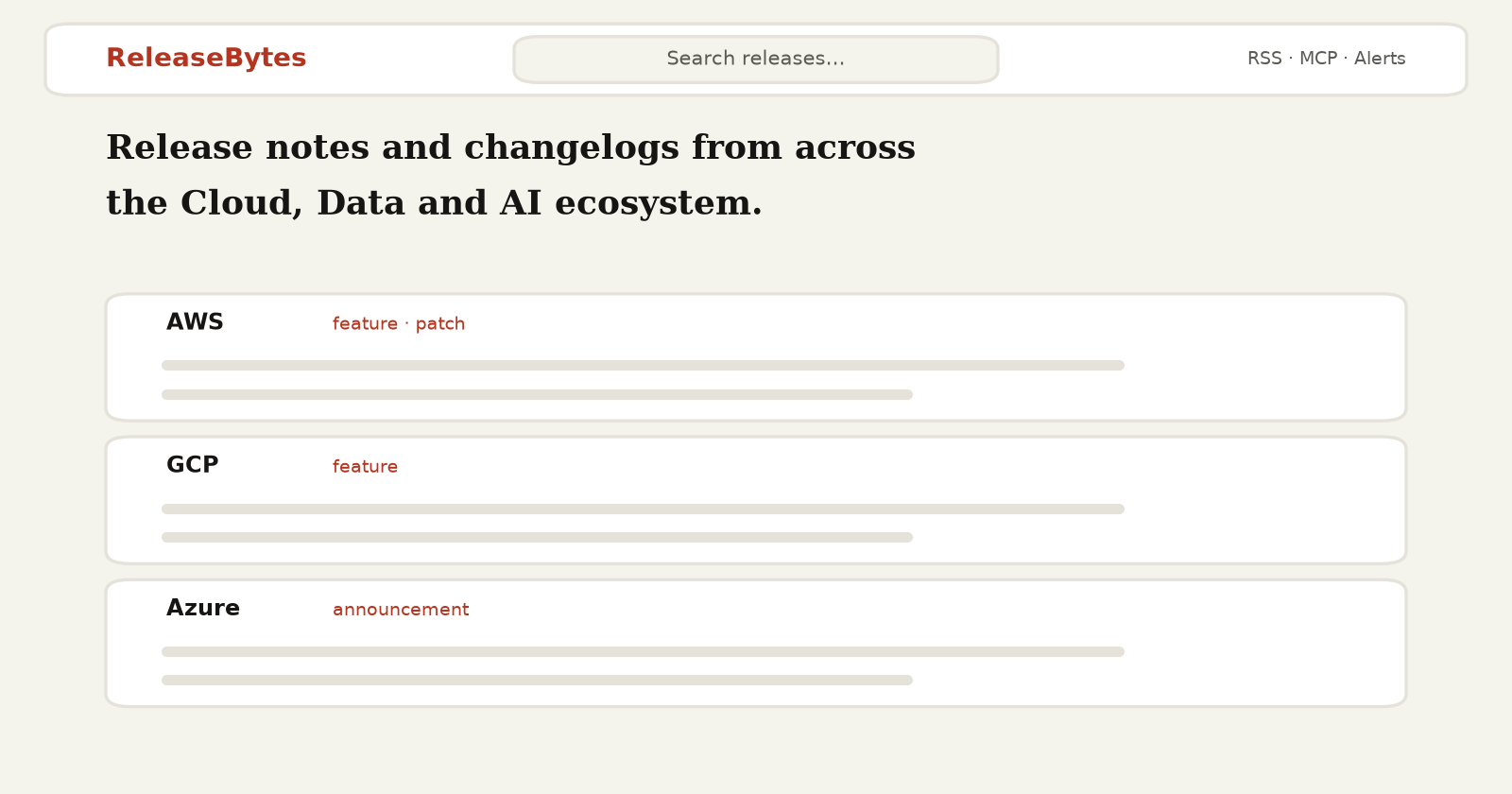
Instead of checking multiple websites every day, ReleaseBytes continuously monitors official release notes from cloud platforms, AI providers and developer tools.
Every release is:
- Searchable
- Categorised by platform and release type
- Summarised with AI
- Linked back to the original source
- Available through RSS feeds, email alerts and our MCP server
The goal isn't to replace official documentation.
It's to make discovering important updates dramatically easier.
The scale surprised us
Once ReleaseBytes was running, we realised just how quickly the cloud and AI ecosystem moves.
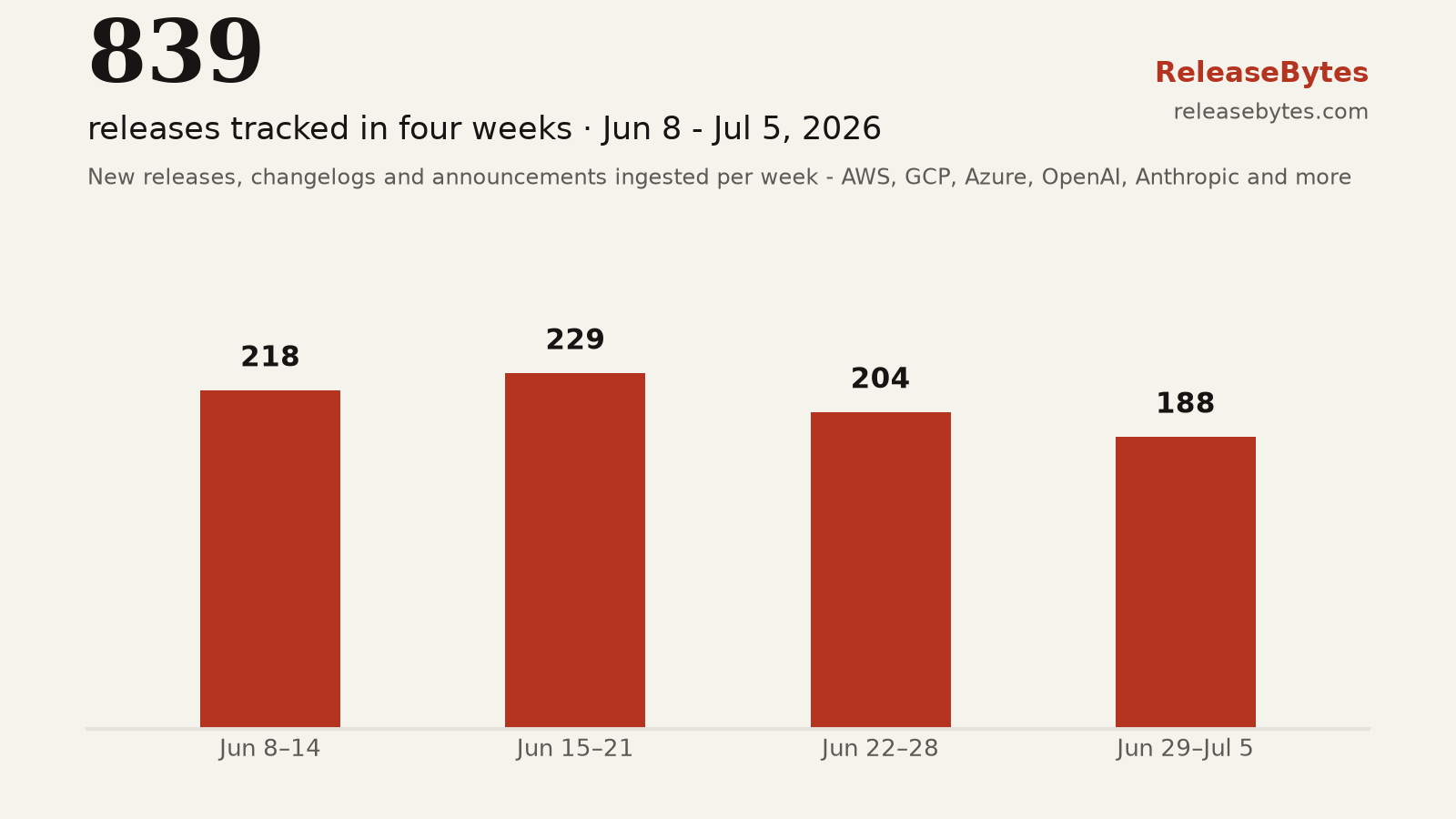
In just four weeks, ReleaseBytes tracked:
839 releases
Across AWS, Azure, Google Cloud, OpenAI, Anthropic and many other developer platforms.
That's more than 200 announcements every week.
No individual engineer has time to manually keep up with that volume of change while also building software.
Beyond a release notes website
Collecting release notes is only the beginning.
Once updates exist in a structured dataset, they become much more useful.
Today, ReleaseBytes supports:
- Search across thousands of release notes
- AI-generated summaries
- RSS feeds
- Email alerts
- An MCP server for AI assistants
We're also working on new ways to bring updates directly into developers' existing workflows through tools like Slack and GitHub.
The long-term vision is simple:
Instead of searching for release notes, the right updates should come to you.
Why we're building this
Software platforms are evolving faster than ever.
Keeping up shouldn't require monitoring dozens of blogs, changelogs and documentation websites every week.
We believe engineers should spend their time building software - not hunting for release notes.
ReleaseBytes is our attempt to solve that problem.
If you're a cloud, platform or AI engineer, we'd love to hear what platforms you find hardest to keep up with - and what would make staying current easier. Get in touch.
Keep exploring
Stay current without the tab-hopping
One weekly digest with the most notable cloud, AI and developer platform releases - summarised and linked to the source.
Read the weekly digest